
Aquaculture farm basics: how fish and shellfish farming works
An aquaculture farm raises fish, shellfish, or seaweed in water it manages: ponds, tanks, raceways, or pens in the sea. Water, species, and a buyer come first. Everything else follows from those three.
Figures on this site come from USDA, NOAA, the EPA, and university extension services, and each one names its source.
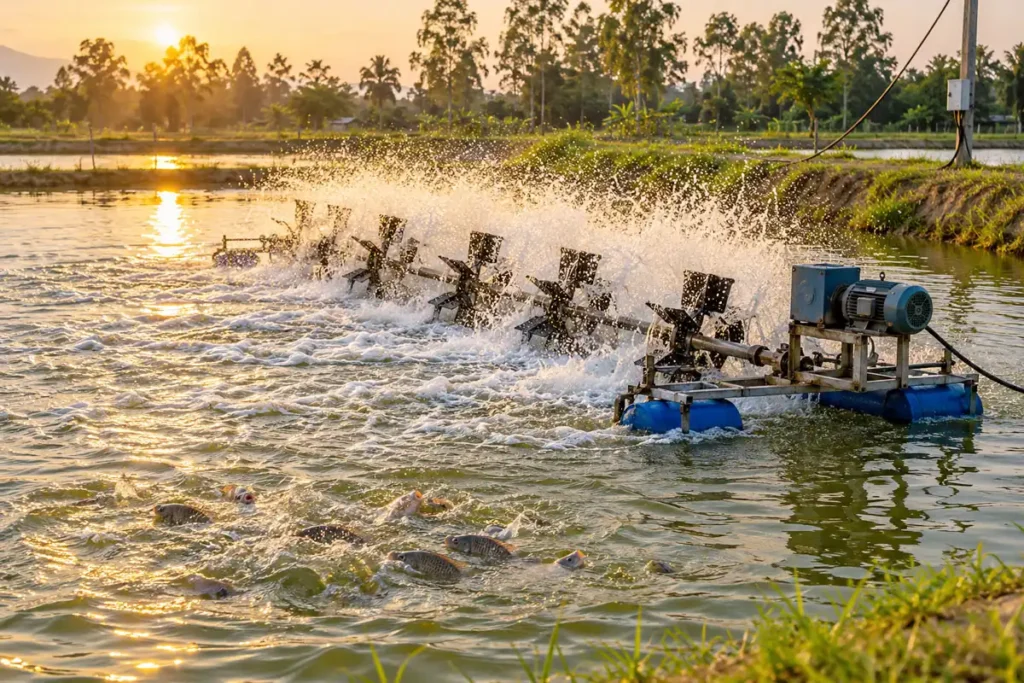
What is an aquaculture farm?
An aquaculture farm breeds, raises, and harvests aquatic animals or plants in water it controls. NOAA describes two main types. Freshwater farms grow fish such as catfish and trout. Marine farms grow oysters, clams, mussels, salmon, and seaweed.
In the US, fish farming counts as agriculture. USDA runs its Census of Aquaculture as a follow-on to the Census of Agriculture. It counts any place that sells at least $1,000 of aquaculture products in a year as a farm. People sometimes call it the agriculture of fish.
Aquaculture farms range from a few backyard tanks to coastal salmon operations. Every one has the same core job: keep the water right, feed well, prevent disease, and sell the harvest.
How many aquaculture farms are there in the US?
- $1.9 billion in sales, 26% more than in 2018. The average farm sold about $553,000.
- Catfish led food fish at $480 million, 59% of food fish sales. Oysters led mollusks at $327 million, 57% of mollusk sales.
- Mississippi and Washington each sold about $277 million, with Mississippi ahead by about $60,000.
- Louisiana had the most farms: 818, about 24% of the US total, per USDA’s Economic Research Service. About half of all farms are in the Southeast.
- Five states (Mississippi, Washington, Louisiana, Florida, and Alabama) made up 55% of sales and 49% of farms.
- Most seafood is still imported. NOAA says the US imports about 70 to 85% of the seafood it eats, and about half of those imports are farmed.
- Worldwide, farming now leads. NOAA reports FAO’s finding that aquaculture supplied 51% of aquatic animal production in 2022, passing wild catch for the first time.
Sales by sector, 2023
Gridlines mark every $100 million. Source: USDA NASS, 2023 Census of Aquaculture (released December 2024); USDA ERS; NOAA Fisheries.
Aquaculture systems: five ways to farm fish and shellfish
Most aquaculture farming in the US uses one of five production systems. The right one depends on your water, your species, and how much you can spend to build and run it.
| System | How it works | Water use | Typical US species | Watch out for |
|---|---|---|---|---|
| Earthen ponds | Fish grow in shallow ponds filled from wells or runoff. Algae add oxygen by day. | About 100 gallons per pound of fish at a 5,000-pound-per-acre yield (SRAC) | Catfish, crawfish, baitfish | Oxygen drops overnight and bottoms out before dawn |
| Raceways | Long channels with a constant flow of cold spring or well water. Water passes through once. | Large, steady flows year-round | Trout | Needs a reliable cold water supply and may need a discharge permit |
| Recirculating systems (RAS) | Indoor tanks with filters that remove waste and convert ammonia so the water can be reused. | A fraction of what ponds use (SRAC) | Tilapia, trout, salmon, fingerlings | High building and power costs; needs alarms and backup power |
| Net pens and cages | Floating pens moored in lakes, bays, or the ocean. | Uses the surrounding water | Salmon and other marine fish | Open-water permits, disease, and escapes |
| Shellfish and seaweed gear | Bags, cages, and ropes set on the bottom or hung from floats. | No added feed, fresh water, or fertilizer (NOAA) | Oysters, clams, mussels, kelp | Harvest waters must meet state shellfish safety rules |
Aquaponics is a close cousin of recirculating systems. It pairs fish tanks with plants that take up the fish waste as fertilizer, so one water loop grows two crops.
Sources: SRAC Publication 451; NOAA Ocean Service; NOAA Fisheries; U.S. EPA.
What do fish farms grow? The main US species
Species choice comes down to water temperature, state rules, and who will buy the harvest. Catfish leads US aquaculture fish farming by a wide margin, and oysters lead shellfish. The colored edge on each card shows the water it needs.
Channel catfish Warmwater
The top US food fish. Catfish sales reached $480 million in 2023, 59% of all food fish sales (USDA NASS).
Trout Coldwater
Rainbow trout grow in water between 50 and 70°F, per University of Tennessee Extension. Raceways fed by cold springs are common.
Tilapia Tropical
Grows best at 82 to 86°F, slows below 68°F, and dies below 50°F, per SRAC. Check first whether your state allows it.
Crawfish Freshwater
A pond crop. NOAA counted 197 million pounds of farmed crawfish in 2022.
Oysters Saltwater
The top US mollusk, with $327 million in 2023 sales. An adult oyster can filter up to 50 gallons of water a day (NOAA).
Clams and mussels Saltwater
Grown in bags, cages, or on ropes. Like oysters, they feed themselves from the water.
Shrimp and crustaceans Fresh or salt
Crustacean sales grew 75% from 2018 to $175.7 million in 2023 (USDA NASS).
Salmon Saltwater
Raised in ocean net pens or in tanks on land, per NOAA.
Seaweed Saltwater
Needs no feed or fertilizer. Seaweed pulls carbon dioxide from the water and gives off oxygen as it grows (NOAA).
Sources: USDA NASS; University of Tennessee Extension; SRAC Publication 280; NOAA Fisheries; NOAA Fisheries of the United States 2022.
Water quality: the readings that keep fish alive
Fish farming is mostly water management. New Mexico State University Extension calls dissolved oxygen the single most important factor, and low oxygen is the leading cause of fish kills.
Dissolved oxygen
ppm, the same as mg/L
Can kill warmwater fish Stress Healthy, 5 to 10
pH
acid to alkaline
Deadly Slower growth Best, 6 to 9
Alkalinity
ppm as calcium carbonate
Acceptable, 50 to 200 Outside that range
- Check oxygen before dawn. That’s when it’s lowest, so it’s the reading that matters most.
- Start aerators before oxygen drops below 3 mg/L, and run them until it holds at 5 or higher, per Texas A&M AgriLife.
- Warm water holds less oxygen. Water at 52°F holds 40% more oxygen than water at 80°F (NMSU).
- Watch ammonia when pH climbs. Ammonia from fish waste turns more toxic as pH and temperature rise (NMSU).
- Coldwater fish need more. Trout and salmon need about 6.5 ppm of oxygen, compared with about 5 for catfish and bass (NMSU).
Sources: New Mexico State University Extension, Guide W-104; Texas A&M AgriLife Extension, Low Oxygen and Pond Aeration.
Fish feeds: what farmed fish eat
Feed is usually the biggest cost on a fish farm. On catfish farms it’s more than half of variable costs, per Mississippi State University Extension, so how you feed decides whether you make money.
- Small fish eat more for their size. SRAC puts daily rations between 1.5 and 15% of body weight, with the high end for small fish.
- More protein isn’t always better. Mississippi State Extension notes that a 28% protein feed is adequate for catfish growout.
- Track feed conversion. FCR is pounds of feed per pound of gain. Mississippi State pond trials recorded about 1.6 to 1.7 for catfish.
- Don’t overfeed. Uneaten feed rots and uses up oxygen (NMSU).
- Shellfish need no feed. Oysters, clams, and mussels filter their food from the water.
Catfish feed by life stage
Channel catfish feeds, per Mississippi State University Extension. Dots show relative feed size, not actual size. Other species differ.
Sources: Mississippi State University Extension, Nutrition, Feeds, and Feeding; Mississippi State, Plant-Based Catfish Feeds; SRAC Publication 451.
How to start an aquaculture farm
Extension specialists give new fish farmers the same advice: find a buyer before you dig a pond. Aquaculture is a business first, and a risky one. Work through these steps in order.
Find your market
Oregon’s Department of Agriculture puts a market survey before everything else. Alabama Extension calls talking with likely buyers a great first step.
Check your water and land
You need enough clean water all year. Ponds also need clay soils that hold water, per the North Central Regional Aquaculture Center.
Pick a species that fits
Water temperature decides what can grow. Check state rules too: SRAC tells would-be tilapia farmers to confirm the species is legal in their state first.
Choose a production system
Ponds cost less to run. Recirculating tanks save water and space but cost more to build and power.
Write a business plan
Budget for feed, the biggest cost, and for the long wait before your first harvest pays anything back.
Get permits before you build
State agencies license fish farms. Larger farms may also need an EPA discharge permit. It generally applies to farms that discharge on 30 or more days a year. The thresholds are 100,000 pounds of warmwater fish or 20,000 pounds of coldwater fish a year.
Talk to an extension aquaculture specialist
Your county Extension office is a good place to start, and the five USDA Regional Aquaculture Centers publish free fact sheets.
Sources: Oregon Department of Agriculture; Alabama Cooperative Extension System, ANR-3206; NCRAC Technical Bulletin 106; SRAC Publication 280; U.S. EPA, Aquaculture NPDES Permitting.
Fish farming equipment you’ll actually need
Gear depends on the system, but every fish farm needs a way to add oxygen, measure the water, and move fish. Start with these and add to them as the farm grows.
Aerators
Paddlewheels or diffusers add oxygen when ponds run low. Texas A&M AgriLife suggests no more than 2,000 fish per acre in ponds without aeration.
Dissolved oxygen meter
The most important reading on any fish farm. Check it before dawn, when oxygen is lowest.
Water test kits
For pH, ammonia, nitrite, and alkalinity, the readings behind most fish health problems.
Pumps and pipes
For filling, flushing, and moving water through filters and tanks.
Nets and seines
For sampling fish, sorting sizes, and harvest.
Feeders
Demand or automatic feeders save labor in tanks and raceways.
Backup power and alarms
SRAC design guidance calls for alarm systems on recirculating farms, where pumps and aeration have to run around the clock.
Tanks and biofilters
The core of a recirculating system: tanks plus filters that remove solids and turn ammonia into nitrate.
Sources: Texas A&M AgriLife Extension; SRAC Publication 451; NMSU Extension. Browse fish farming equipment guides.
Aquaculture and sustainability
Done well, aquaculture adds local seafood with a small footprint. Done poorly, it pollutes water and spreads disease. Here’s what the research shows on both sides.
+Where farming helps
- NOAA calls aquaculture one of the most resource-efficient ways to produce protein.
- An adult oyster can filter up to 50 gallons of water a day. At 100,000 oysters per acre, a farm can filter up to 5 million gallons daily (NOAA).
- Across 65 studies, shellfish and seaweed farms were linked to higher species diversity (NOAA).
- In a NOAA study in South Carolina, harvesting a million farmed oysters removed about 300 pounds of nitrogen a year.
!What farms must manage
- Nutrient-rich wastewater. Larger farms need discharge permits, and EPA sets effluent rules for farms producing 100,000 pounds or more a year.
- Low dissolved oxygen. It slows feeding and growth and leaves fish more open to disease, per Texas A&M, and NMSU names it the leading cause of fish kills.
- Feed sourcing. Feed is the biggest input on finfish farms. Catfish growout feeds are now mostly plant-based, per Mississippi State.
- Non-native species. Some species aren’t legal in every state, which is why rules come before stocking (SRAC).
Sources: NOAA Fisheries; NOAA, Habitat Benefits from Shellfish and Seaweed Aquaculture; NOAA NCCOS; U.S. EPA; Texas A&M Fisheries; Mississippi State.
Latest guides
Catfish
When Do Catfish Spawn? Season, Nest, and Egg Hatch Timeline
Catfish spawn on water temperature, not on a calendar date. So when do catfish spawn? The answer shifts by species,…
November 11, 2026
Oysters
What Do Oysters Eat? Diet by Life Stage and What It Means for Farms
What do oysters eat when nobody feeds them? On a farm lease, they strain every meal from moving seawater. So…
November 11, 2026
Shrimp
How Long Do Shrimp Live? Lifespan by Species, Farm and Tank
How long shrimp live depends on the species and the water around it. A farmed Pacific white shrimp, a pet-store…
November 11, 2026
Crawfish
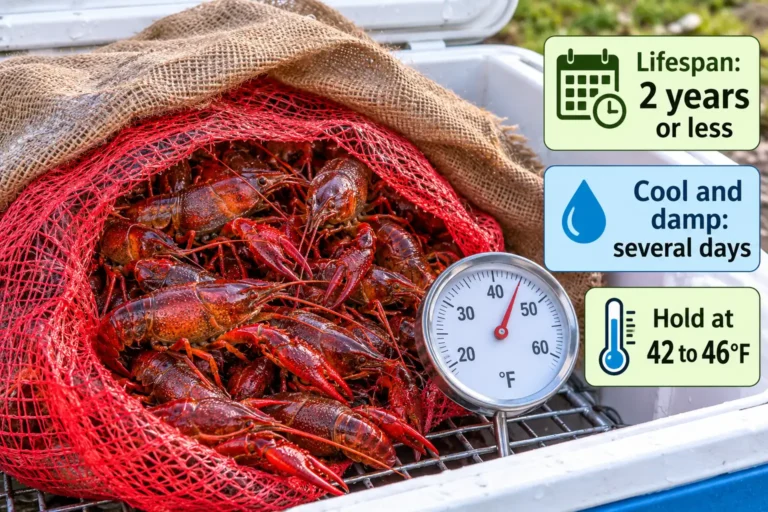
How Long Do Crawfish Live? Lifespan, Out of Water, and in a Sack
Crawfish lifespan matters in two places: the farm pond and the ice chest. Farmers holding broodstock need to know how…
November 11, 2026
Catfish
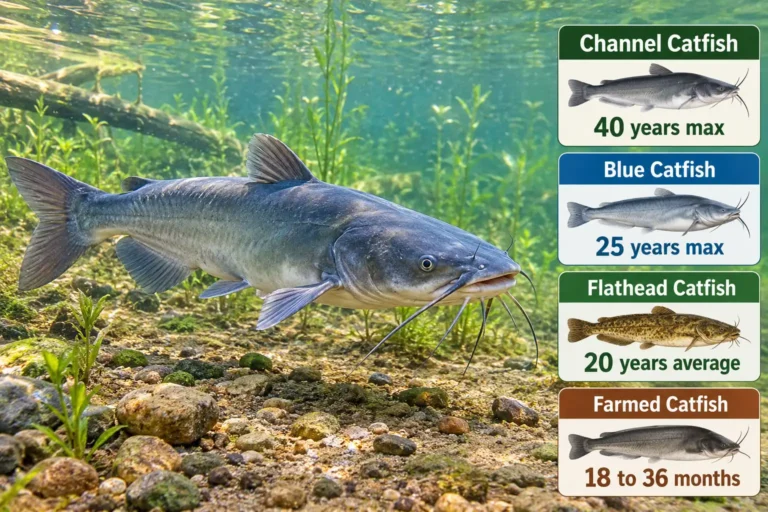
How Long Do Catfish Live? Lifespan by Species, Wild and Farmed
How long do catfish live? It depends on the species and on whether the fish is wild, farmed, or kept…
November 11, 2026
Crawfish
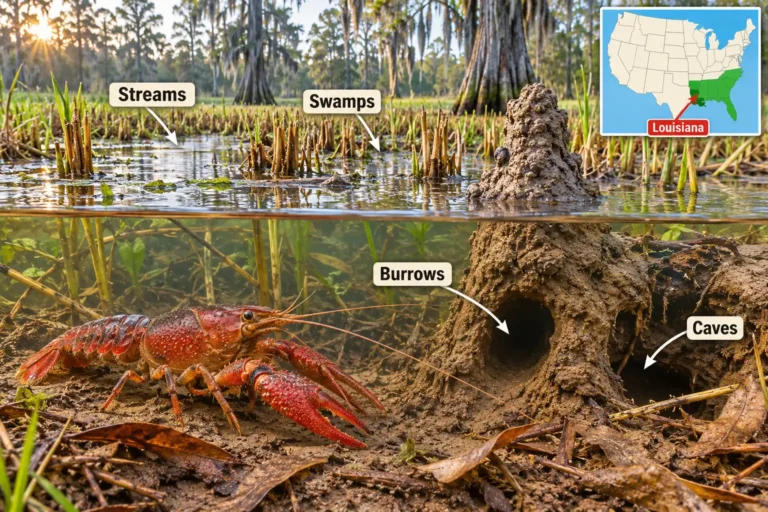
Where Do Crawfish Live? Habitats, US Range, and Common Names
Crawfish turn up in creeks, swamps, rice fields, and even soggy lawns. So where do crawfish live, and why does…
November 11, 2026
Aquaculture farm questions
What is an aquaculture farm?
A farm that breeds, raises, and harvests fish, shellfish, or aquatic plants in water it manages. USDA counts any place that sells at least $1,000 of aquaculture products in a year as an aquaculture farm.
How many aquaculture farms are there in the US?
USDA’s 2023 Census of Aquaculture counted 3,453 farms with sales, up 18% from 2018. They sold $1.9 billion of products. Louisiana had the most farms, and Mississippi narrowly led Washington in sales.
Is aquaculture the same as fish farming?
Mostly. Fish farming means raising finfish, while aquaculture farming also covers shellfish and seaweed. Pisciculture is an older word for fish farming, and mariculture means farming in the sea.
What is the most farmed fish in the US?
Catfish. Catfish sales reached $480 million in 2023, which was 59% of all US food fish sales, according to USDA’s Census of Aquaculture.
How much water does a fish farm need?
It depends on the system. SRAC estimates about 100 gallons per pound of fish for ponds yielding 5,000 pounds per acre. Recirculating systems reuse their water and need a fraction of that.
What do farmed fish eat?
Mostly pelleted feeds. Catfish raised for food get floating pellets with 28 to 32% protein, per Mississippi State University Extension. Oysters, clams, and mussels need no added feed at all.
Do I need a permit to start a fish farm?
Usually. States set their own license rules, so start with your state agriculture or wildlife agency. Larger farms that discharge water on 30 or more days a year may also need an EPA discharge permit.
Is farmed fish sustainable?
It can be. Shellfish and seaweed farms can improve water quality, according to NOAA. Finfish farms have to manage wastewater, disease, and feed, so management makes the difference.
How do I start an aquaculture farm?
Find a buyer first. Then confirm your water, species, and system, write a business plan, and get permits before you build. An extension aquaculture specialist can help at every step.
Is aquaculture considered agriculture?
Yes, in the US. USDA counts fish farms as farms and surveys them in its Census of Aquaculture, a follow-on to the Census of Agriculture. Raising fish this way is sometimes called the agriculture of fish.
How we work
These guides aren’t based on anyone’s own ponds or tanks. Every figure comes from USDA, NOAA, the EPA, a university extension service, or a Regional Aquaculture Center, and the source sits right next to it.
When sources disagree, we show both. We don’t diagnose sick fish from photos or publish drug doses. A fish health lab or your extension aquaculture specialist does that better.
Sources we rely on
- USDA NASS, 2023 Census of AquacultureFarm counts, sales, and sectors
- USDA Economic Research ServiceAquaculture by state
- NOAA Ocean ServiceWhat aquaculture is
- NOAA FisheriesMarine aquaculture and seafood imports
- New Mexico State University ExtensionPond water quality (Guide W-104)
- Southern Regional Aquaculture CenterRecirculating systems and water use
- Mississippi State University ExtensionCatfish feeds and feeding
- Texas A&M AgriLife ExtensionLow oxygen and pond aeration
- University of Tennessee ExtensionRaising rainbow trout
- U.S. EPAAquaculture discharge permits
- Oregon Department of AgricultureStarting an aquaculture business
- Alabama Cooperative Extension SystemPlanning an aquaculture business
Corrections and contact
Found a figure that looks wrong?
Tell us the page, the figure, and the source you’re comparing against.
Corrections usually go up the same week.
Everything else
Questions about the site, permissions, or a page that won’t load.
We aim to reply within three business days.
Sick fish or a sudden die-off?
Check dissolved oxygen first, then call your extension aquaculture specialist or a state fish health lab. They can test samples and tell you what’s wrong.