
How Long Do Shrimp Live? Lifespan by Species, Farm and Tank

How long shrimp live depends on the species and the water around it. A farmed Pacific white shrimp, a pet-store cherry shrimp, and a reef mantis shrimp sit years apart. Below are the published figures for each, plus whether shrimp legally count as fish.
How long do shrimp live? Most true shrimp live 2 years or less. Wild white shrimp rarely reach age 2. Cherry shrimp live about a year, and farmed Pacific white shrimp are harvested at 4 to 7 months.
How Long Do Shrimp Live? Lifespan by Species
Species matters more than anything else. Each figure below comes from the source named beside it. Farmed shrimp appear as harvest age, because farms sell them long before old age.
| Shrimp | Water | Lifespan or age | Source |
|---|---|---|---|
| Pacific white shrimp, farmed | Brackish, marine, or low-salinity ponds and tanks | Harvested at about 4 to 7 months | FAO production cycle (worked out below) |
| White shrimp, wild | Gulf and Atlantic estuaries and coastal ocean | Usually under 2 years | NOAA Fisheries |
| Cherry shrimp | Fresh water, mostly aquariums | About 10 to 13 months (males), 12 to 15 months (females) | USFWS, citing Mitsugi and Suzuki (2018) |
| Ghost or grass shrimp | Fresh to brackish water | About 6 to 13 months (daggerblade grass shrimp) | USFWS grass shrimp species profile |
| Brine shrimp | Salt lakes and hatchery tanks | Several months as adults; dry cysts keep for months or years | FAO; SRAC Publication 702 |
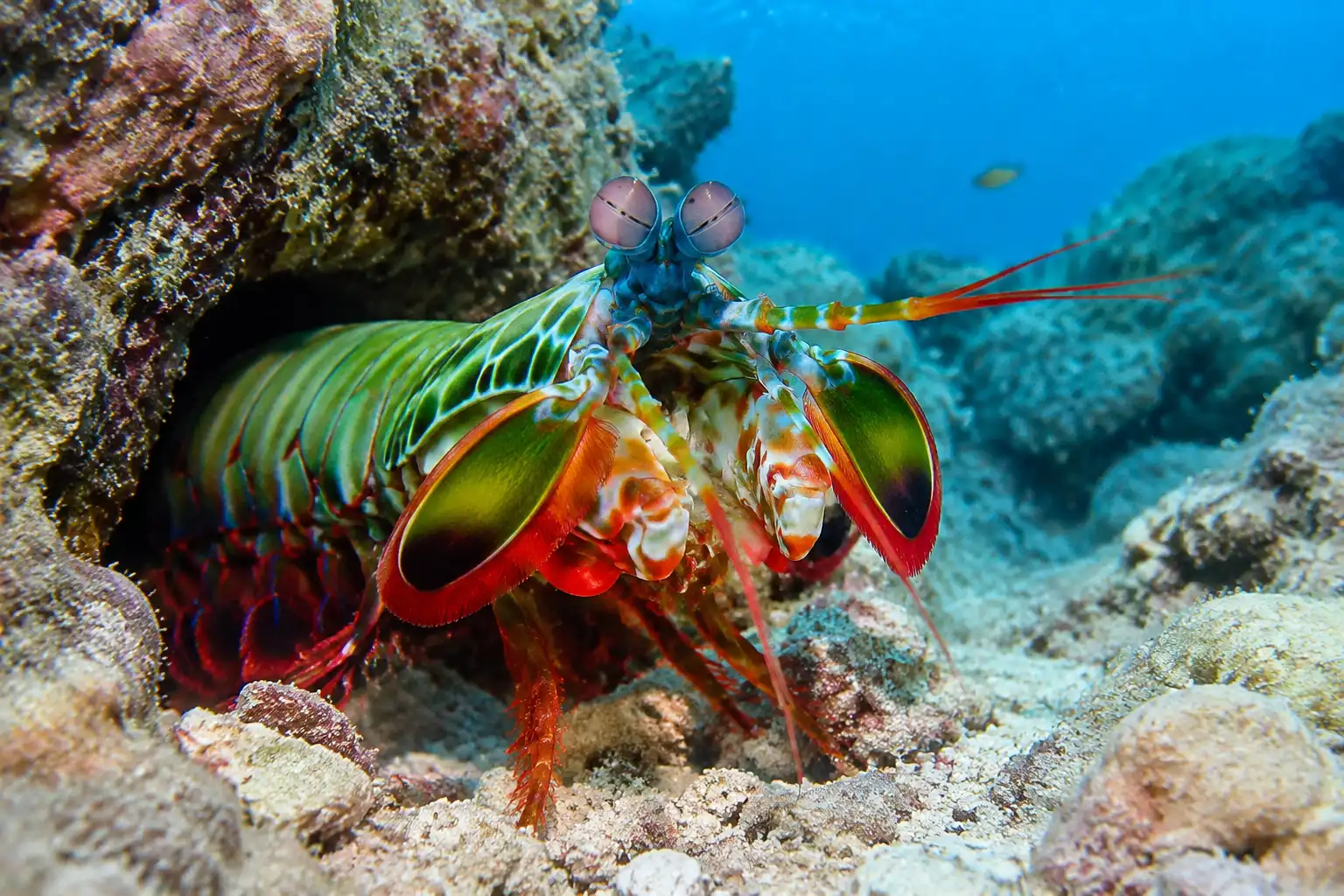
| Peacock mantis shrimp | Tropical coral reefs | 4 to 6 years | Animal Diversity Web |
Mantis shrimp share the name but not the family tree. So their longer lives say nothing about true shrimp.

Farmed Pacific White Shrimp: Harvest Age vs. Natural Lifespan
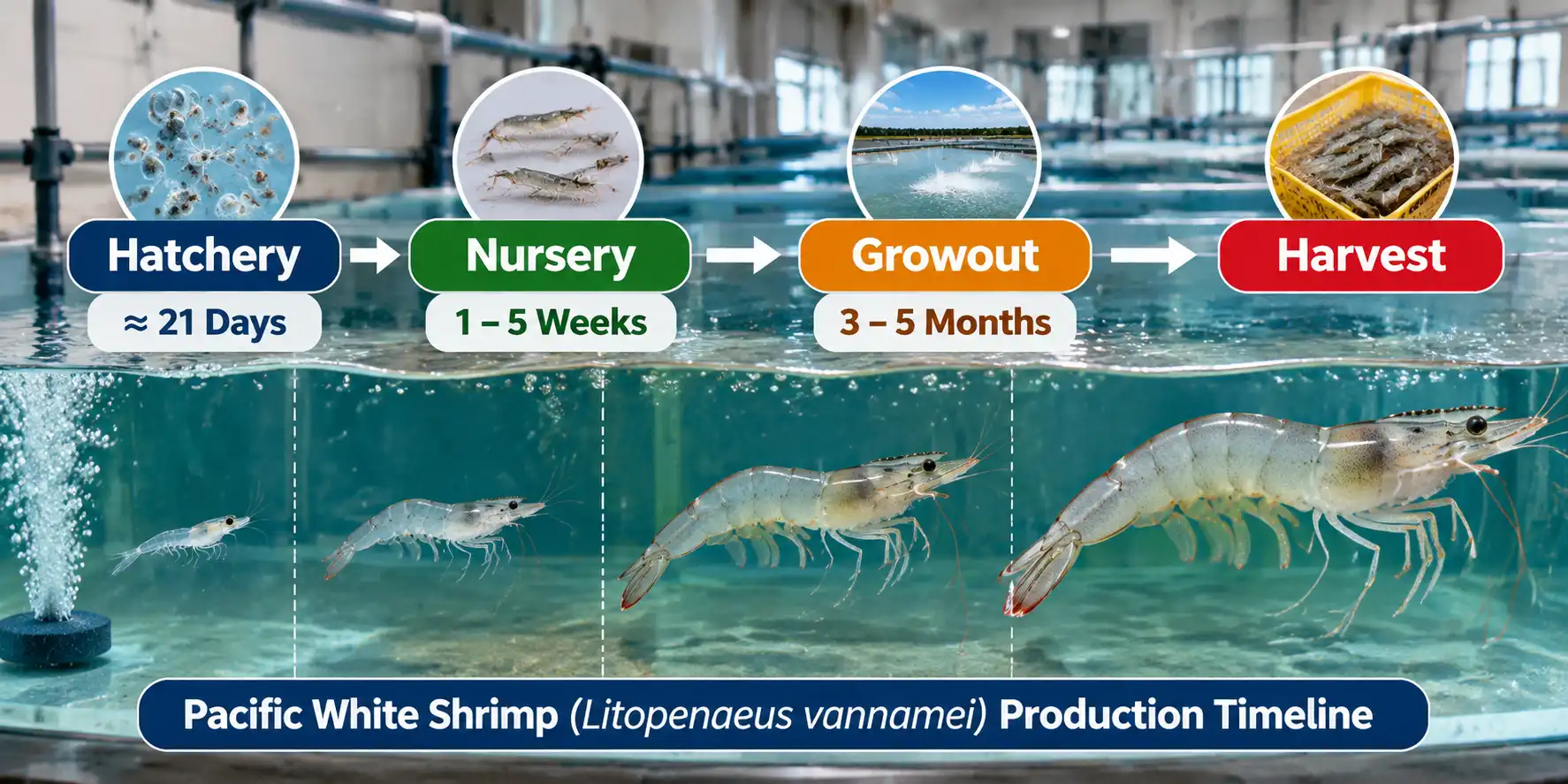
Farmed Pacific white shrimp are harvested at about 4 to 7 months old. That is a production schedule, not a natural limit.
FAO’s cultured species fact sheet for whiteleg shrimp lays out the cycle:
- Hatchery: about 21 days from hatching to postlarvae (PL12).
- Nursery: typically 1 to 5 weeks.
- Growout: 3 to 5 months in super-intensive systems, with mean harvest weights of 16 to 26 grams.
Add those stages, and a shrimp reaches harvest at roughly 4 to 7 months of age. At 16 to 26 grams, each weighs about 0.6 to 0.9 ounces. That works out to roughly 17 to 28 whole shrimp per pound.
By comparison, FAO notes that maturity starts at 6 to 7 months. Males start near 20 grams, and females near 28 grams. So most farmed shrimp are sold at or before sexual maturity.
FAO gives no natural lifespan for this species, though. The closest US reference is a Gulf relative, the white shrimp, which NOAA Fisheries says usually lives under 2 years.
The same math sets how often a tank turns over. If growout takes 3 to 5 months, one tank yields about 2.4 to 4 crops a year. Year-round crops also need water near 73 to 86°F, where FAO says the species grows best. In cold states, that means heated indoor systems such as biofloc tanks. Our guide to raising Pacific white shrimp covers growout in full.
How Long Do Wild Shrimp Live?
Wild white shrimp usually live less than 2 years, per NOAA Fisheries.
Their short life runs on a tight seasonal loop:
- Spawning: Adults spawn offshore once bottom water warms. That runs March through September in the Gulf and May through September in the Carolinas, per NOAA.
- Eggs: Each female releases roughly 500,000 to 1 million eggs near the sea floor.
- Nursery: Young shrimp move into estuaries in spring. There they grow in muddy-bottomed nursery areas with low to moderate salinity.
- Growth: White shrimp grow fast and can reach 7 to 8 inches. They can reproduce at about 5.5 inches long.
Shrimp that survive winter grow quickly in late winter and early spring, then return to the ocean. That one-year loop is why NOAA calls white shrimp an annual crop.
Wild and farmed shrimp also die for different reasons. In estuaries, NOAA lists sheepshead minnows, grass shrimp, killifishes, blue crabs, and many finfish as predators at various stages. On a farm, the harvest date sets the end instead.

How Long Do Cherry Shrimp Live?
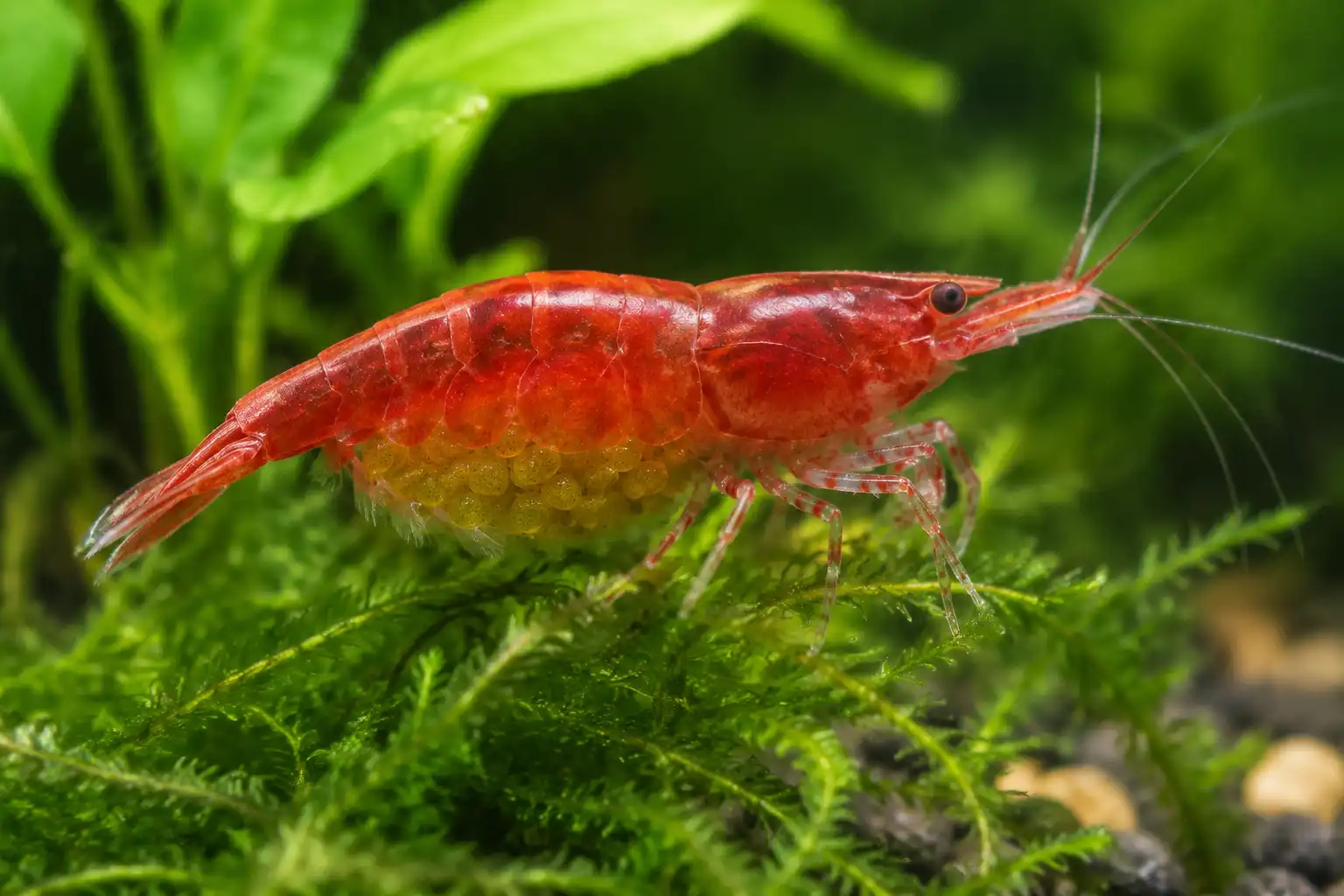
Cherry shrimp live about a year. A 2025 USFWS ecological risk screening for cherry shrimp cites the key research. It puts males at about 10 to 13 months and females at 12 to 15 months. That study also calls for more samples. So treat the cherry shrimp lifespan as a sound estimate, not a fixed limit.
A short life doesn’t hold a colony back, because cherry shrimp breed fast. USFWS cites reports that they mature at around 30 days and that eggs hatch after 16 to 19 days. Young hatch as tiny shrimp, with no free-swimming larval stage. That is how a tank keeps a colony for years while each shrimp lives about one.
Temperature shapes breeding more than survival. USFWS cites captive breeding across 57 to 86°F and pH 6 to 8.2. Egg-carrying females were most common at 59 to 68°F and least common above 77°F.
Never release cherry shrimp outdoors. USFWS rates the species high risk for the contiguous United States. Populations have lived on Oahu since 1991, traced to escaped or released aquarium shrimp. USFWS also cites some evidence that they displace native shrimp. Instead, rehome extras through a store or another hobbyist. Our guide to escaped and released aquarium animals explains the wider risk.
How Long Do Ghost Shrimp Live?
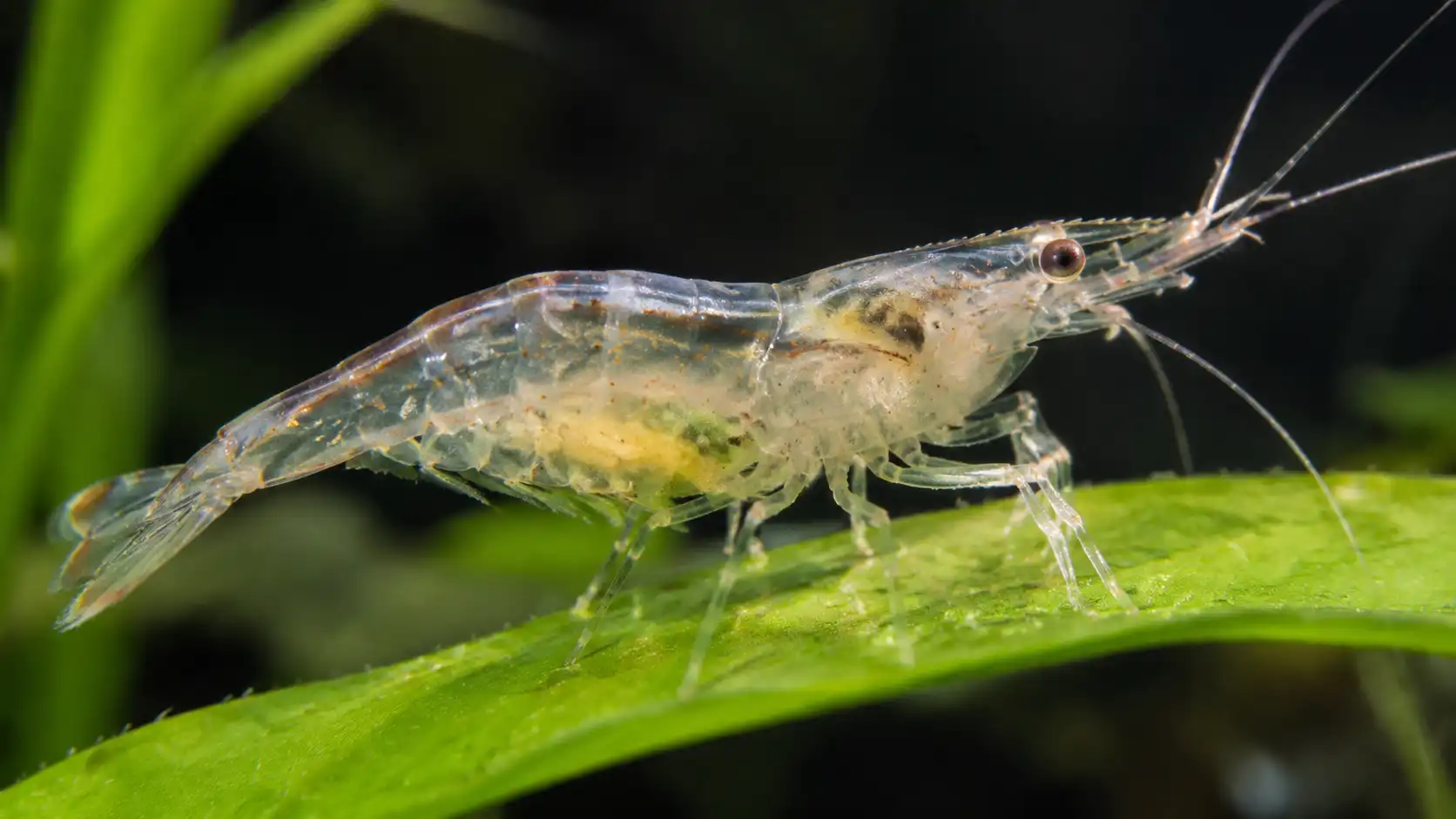
Ghost shrimp usually live a year or less. The name is a trade label, though, not a species. It covers several see-through grass shrimp in the genus Palaemonetes.
The best-studied one is the daggerblade grass shrimp (Palaemonetes pugio) of Atlantic and Gulf marshes. A 1985 USFWS grass shrimp species profile puts its life span at about 6 to 13 months. That figure comes from South Carolina field research. Shrimp that overwinter spawn early in the year and die by the next winter. Meanwhile, most shrimp hatched that year spawn later in the season.
Ghost shrimp sold for home aquariums are often a freshwater species, such as riverine grass shrimp (Palaemonetes paludosus). Stores rarely confirm which one, however. The same USFWS profile classes riverine grass shrimp as a freshwater species but gives no life span for it.
So published lifespan data for freshwater ghost shrimp is thin. The 6 to 13 month figure from their estuarine relative is the closest guide. It is not a measured number for the shrimp in your tank.
How Long Do Brine Shrimp Live?
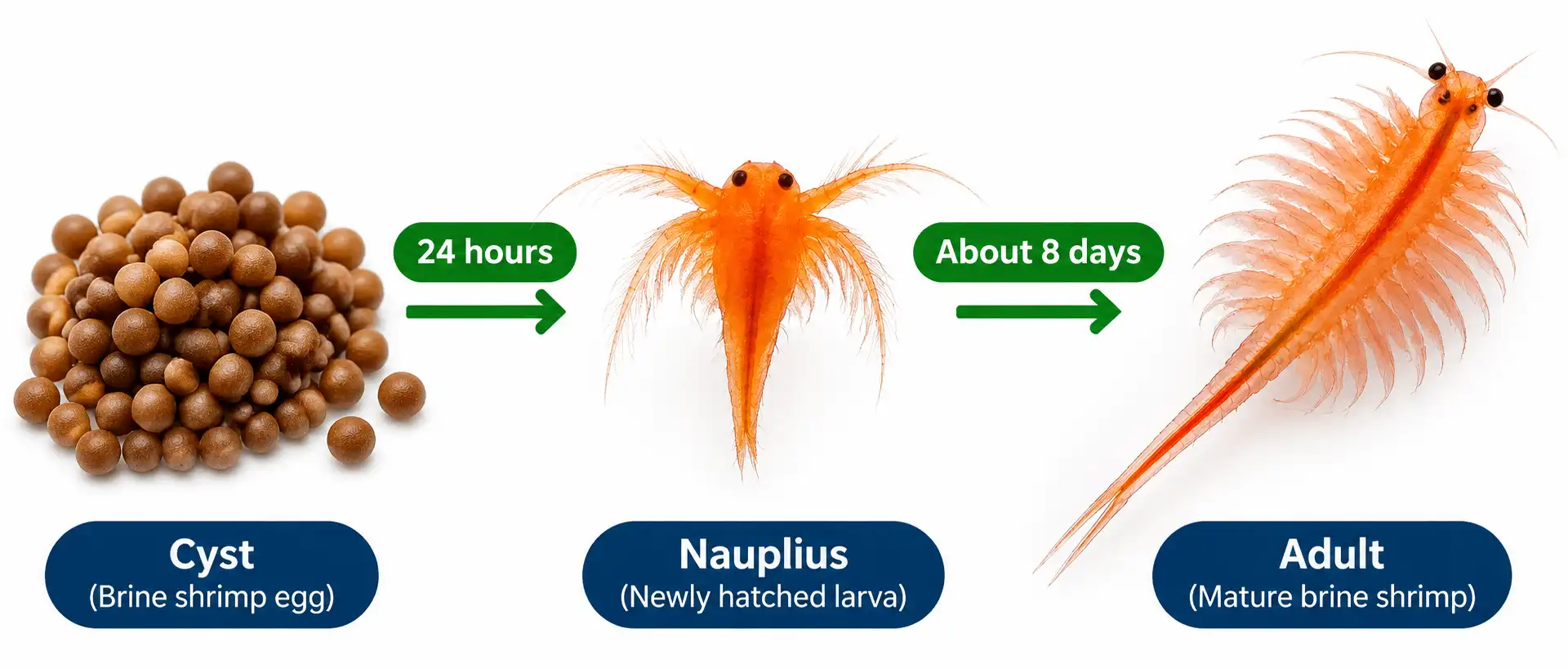
Adult brine shrimp (Artemia) can live for several months under good conditions, according to the FAO live food manual. They also grow fast. SRAC Publication 702 says a newly hatched nauplius passes through 15 molts and reaches adulthood in about 8 days.
For hatcheries, though, the long-lived stage is the cyst. SRAC 702 says dry cysts can be stored for months or years without losing hatchability. Keep them in a tightly sealed container, somewhere cool and dry. Then, after about 24 hours in seawater, cysts release swimming nauplii, per FAO.
SRAC 702 also says to feed nauplii right after hatching, because that is when they are most nutritious. So in a hatchery, most brine shrimp are eaten as nauplii, long before adulthood. More on that in our guide to live feeds for larval fish.
Here is how cyst needs scale to a tank. SRAC 702 suggests holding 0.5 to 2 nauplii per milliliter for most finfish larvae. One gram of high-quality cysts hatches about 200,000 to 300,000 nauplii.
- A 500-gallon larval tank holds about 1.89 million milliliters.
- At 2 nauplii per milliliter, that tank needs about 3.8 million nauplii.
- At 200,000 to 300,000 nauplii per gram, that takes roughly 13 to 19 grams of cysts.
How Long Do Mantis Shrimp Live?
Peacock mantis shrimp live about 4 to 6 years, per the University of Michigan’s Animal Diversity Web. That account draws on published stomatopod research. So mantis shrimp outlive every true shrimp in this guide several times over.
Mantis shrimp aren’t true shrimp, however. They belong to the order Stomatopoda, while true shrimp are decapods. They are also strictly marine. Animal Diversity Web places peacock mantis shrimp in U-shaped burrows on Indo-Pacific reefs. Their water runs about 72 to 82°F.
Figures of 20 years or more circulate widely online. We could not trace them to a published lifespan study, so we leave them out. Longevity research on mantis shrimp is thin overall.
What Shortens a Shrimp’s Life?
When shrimp in a pond or tank start dying, check the water first, starting with dissolved oxygen. Low oxygen, temperature swings, disease, and toxins can look alike. An extension aquaculture specialist or an aquatic animal health lab confirms the cause. Report heavy, unexplained losses on a farm to your state veterinarian or state aquatic animal health official. Keep shrimp on the farm until the cause is known.
Water outside the species’ range
FAO puts best growth for Pacific white shrimp at 73 to 86°F. The species tolerates 59 to 91°F, but it grows more slowly near those edges. Cherry shrimp, by contrast, breed across 57 to 86°F, per USFWS.
Low dissolved oxygen
Dense shrimp ponds need heavy aeration. FAO sizes aeration for intensive Pacific white shrimp ponds at about 1 horsepower per 400 to 600 kilograms harvested. That’s 1 horsepower per roughly 880 to 1,320 pounds. So a pond expected to yield 5,000 pounds needs about 4 to 6 horsepower. Our guide to oxygen levels before dawn covers when to measure.
Sudden changes
FAO also advises avoiding rapid changes in water quality. A wide tolerance range is not the same as tolerance for a quick swing.
Feed and molting
Shrimp grow by molting, so diet matters at every stage. Our guide to what shrimp eat at each stage covers diets from larvae to adults.
Is Shrimp a Fish?
No. Biologically, shrimp are crustaceans, not fish. They have a hard outer shell they shed to grow, jointed legs, and no backbone. Fish, by contrast, are vertebrates.
US food law adds a twist, however. FDA’s seafood HACCP rule defines fish broadly. Its definition covers finfish, crustaceans, and other aquatic animal life meant for human consumption (21 CFR 123.3). So shrimp processors work under the same seafood HACCP rule as fish processors.
Allergen labels split them again. FDA lists fish and crustacean shellfish as two separate major food allergens. The law also requires labels to name the species of fish or crustacean shellfish used. That is why a seafood label can say “shrimp” and “cod” separately.
Are Shrimps Fish or Shellfish?
Shrimp are shellfish. More precisely, FDA calls them crustacean shellfish, along with crab and lobster. Oysters, clams, mussels, and scallops, meanwhile, are molluscan shellfish under the seafood HACCP rule.

Are Shrimp Freshwater or Saltwater?
Both. Some shrimp live in fresh water, some in the sea, and many move between the two over one lifetime.
| Shrimp | Water type | Salinity notes | Source |
|---|---|---|---|
| Pacific white shrimp | Marine, brackish, or inland low-salinity | Tolerates 0.5 to 45 ppt; grows well near 10 to 15 ppt | FAO (2004) |
| White shrimp, wild | Ocean spawning, estuary nurseries | Young grow in low to moderate salinity | NOAA Fisheries |
| Freshwater prawn (Macrobrachium rosenbergii) | Fresh water as adults | Larvae need brackish water at 9 to 19 ppt | SRAC Publication 483 |
| Cherry shrimp | Fresh water | Native to fresh waters of China, Korea, Taiwan, and Vietnam | USFWS |
| Grass or ghost shrimp | Fresh to brackish | Daggerblade grass shrimp live where fresh and salt water mix | USFWS; Animal Diversity Web |
| Brine shrimp | Salt lakes and ponds | Tolerates 3 to 300 ppt | SRAC Publication 702 |
| Peacock mantis shrimp | Marine | Tropical reefs | Animal Diversity Web |
Pacific white shrimp show how wide the range can run. An FAO review of the species puts its comfort zone at 7 to 34 ppt. It also notes that a high share of China’s farmed Pacific white shrimp grow at inland, freshwater sites.
Freshwater prawns show the opposite pattern. Adults live in fresh water. Yet SRAC Publication 483 says their larvae can’t survive in fresh water beyond about 48 hours.

FAQs About Shrimp Lifespan
How long do shrimp live in a fish tank?
Common aquarium shrimp such as cherry and ghost shrimp live about a year or less. Peacock mantis shrimp, which are not true shrimp, live 4 to 6 years per Animal Diversity Web.
How old are farmed shrimp at harvest?
Farmed Pacific white shrimp are usually about 4 to 7 months old at harvest. That total adds FAO’s hatchery (about 21 days), nursery (1 to 5 weeks), and growout (3 to 5 months) stages.
How long do wild shrimp live?
Wild white shrimp usually live less than 2 years, according to NOAA Fisheries, which calls them an annual crop. They can reach 7 to 8 inches and start reproducing at about 5.5 inches long.
Do shrimp die after laying eggs?
Not necessarily, and farmed freshwater prawns offer a clear example of repeat spawning. SRAC Publication 483 says freshwater prawn females can spawn several times a year while water stays above 70°F.
Can brine shrimp eggs really last for years?
Yes, as long as the cysts stay in a sealed container somewhere cool and dry. SRAC Publication 702 says dehydrated brine shrimp cysts store for months or years without losing hatchability.
Are shrimp shellfish?
Yes, shrimp are crustacean shellfish, a major food allergen group FDA lists separately from fish. Oysters, clams, mussels, and scallops, by contrast, are molluscan shellfish under FDA’s seafood HACCP rule.
Can I release extra aquarium shrimp into a pond or creek?
No, and check your state’s rules before buying any live shrimp. USFWS rates cherry shrimp high risk for the contiguous United States, and Oahu’s populations trace to escaped or released pets.
Key Points Before You Stock Shrimp
Match the lifespan to the reason you keep shrimp. A farm sells Pacific white shrimp at 4 to 7 months, long before old age. A cherry shrimp colony lasts for years, even though each shrimp lives about a year. Young shrimp mature in about a month. A brine shrimp hatchery, meanwhile, depends on cysts that keep for years, not on adults.
Before you buy live shrimp, check your state’s rules on owning and stocking them. Never release them. And if shrimp in a pond or tank start dying, test dissolved oxygen first, then call your extension aquaculture specialist.