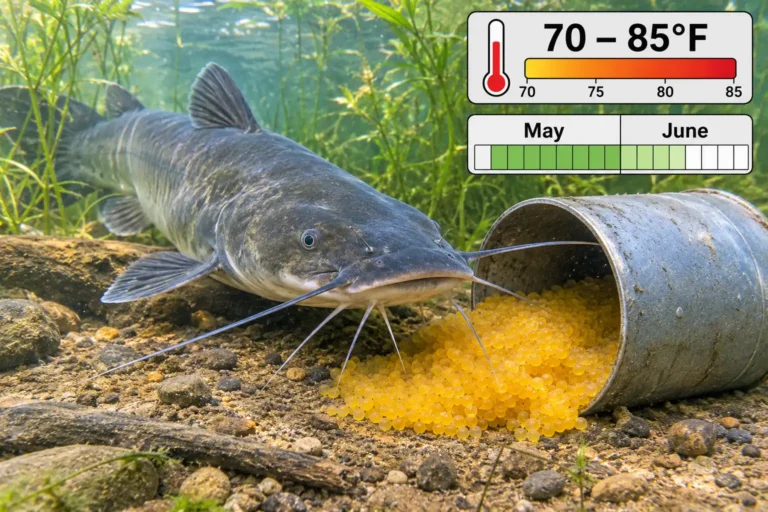
Are Channel Catfish Good to Eat? Taste, Safety, and Size
Most farm-raised catfish sold in the US is channel catfish, and anglers catch plenty of it in rivers and ponds. So are channel catfish good to eat? Taste, mercury, fish size, and cooking each change the answer, and each is covered below.
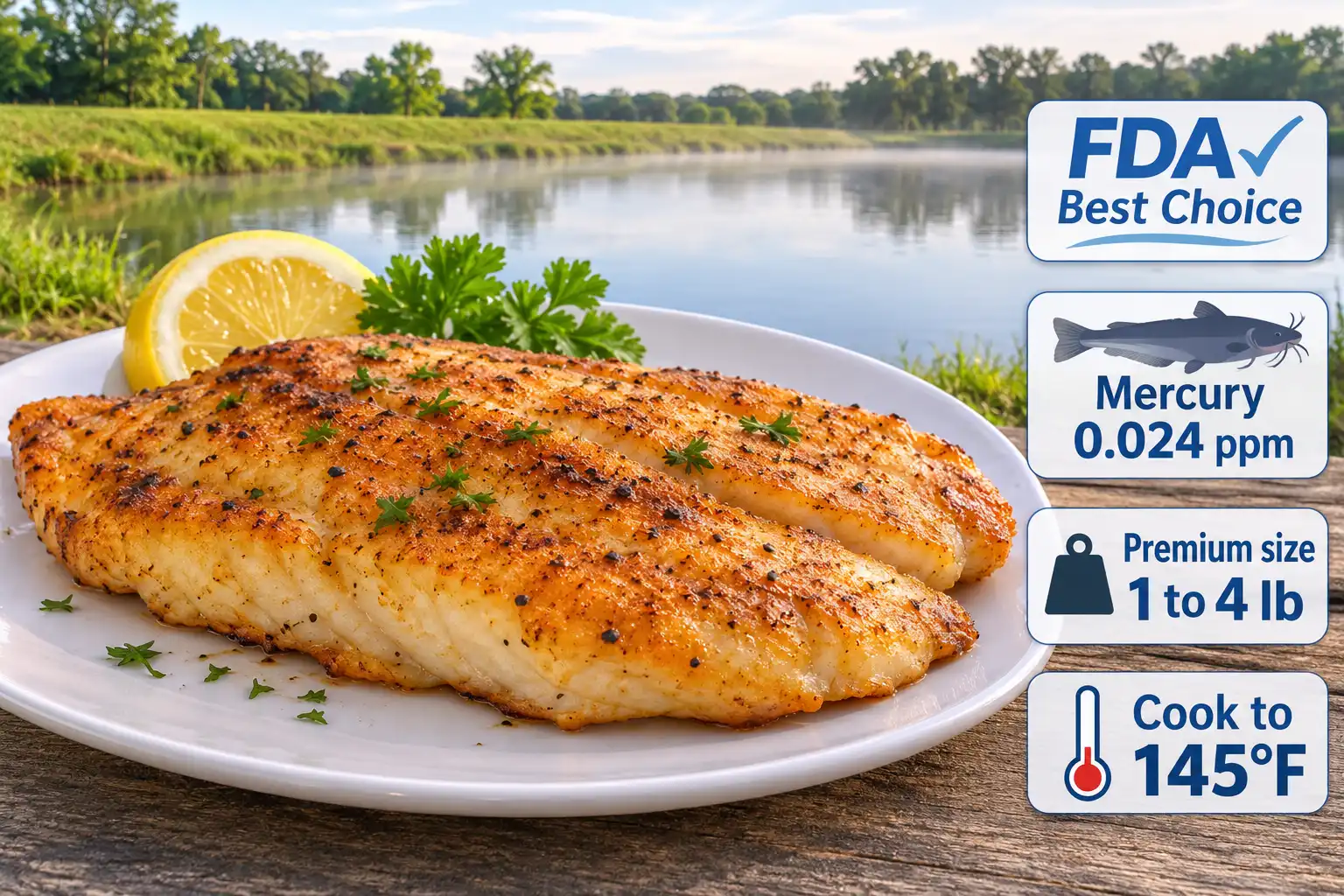
Yes, channel catfish are good to eat. The meat is mild, firm, and white, and FDA lists catfish as a low-mercury Best Choice. For wild fish, check your state’s advisory and keep the smaller ones.
Is Catfish a Good Fish to Eat?
Yes. Catfish is the top-selling farmed food fish in the country, and its safety record holds up.
USDA NASS reported catfish sales of $480 million in the 2023 Census of Aquaculture. That was 59 percent of all US food fish sales. So US farm-raised catfish at the store is almost always channel catfish or hybrid catfish (channel x blue) from Southern ponds.
FDA and EPA also put catfish on the “Best Choices” list in their joint advice about eating fish. That list holds the lowest-mercury options.
Channel catfish makes a good table fish for three reasons:
- Mild flavor that takes breading, spice rubs, and sauces well
- Firm, flaky texture that holds together when fried, baked, broiled, or blackened
- Lean protein with a small amount of fat, especially in wild fish
Flavor consistency is the weak point. Pond and river water can give catfish an earthy or musty taste. That’s why commercial farms test every pond before harvest, as the sections below explain.
Read next: Channel Catfish vs Blue Catfish: Growth, Harvest, and Hybrid Facts
What Does Channel Catfish Taste Like?
Farm-raised channel catfish tastes mild and clean, with firm white flesh. SRAC Publication 431 notes that farm-raised channel catfish is known for its mild flavor, and the industry’s taste checks exist to protect that.
Wild channel catfish varies more. According to SRAC Publication 192, the compounds behind earthy off-flavors come from microbes that are common in soil and water. So a wild fish tastes like the water it lived in, and two fish from different lakes can taste nothing alike.
Fat content changes texture too. Farmed channel catfish carries more than twice the fat of wild fish (see the nutrition table below), so farmed fillets tend to cook up moister and richer. Wild fillets are leaner and dry out faster if you overcook them.
Diet plays a part as well. Farmed fish eat a steady commercial ration, while wild fish eat whatever the river offers. Our guide to what farmed and wild catfish eat covers both diets.
Why Some Catfish Taste Muddy
Most muddy or musty catfish flavor comes from two compounds made by blue-green algae and related microbes. SRAC Publication 192, Managing Off-Flavor Problems in Pond-Raised Catfish, names both:
- Geosmin: an earthy, muddy flavor, a bit like the smell of a damp basement
- 2-methylisoborneol (MIB): a musty, medicinal flavor that can be intense. In catfish ponds, it nearly always comes from the blue-green alga Oscillatoria perornata.
The same publication says MIB problems tend to start in spring, once water temperatures rise above 60 to 70°F. Channel catfish take on the flavor within minutes or hours. However, they purge it slowly.
The good news is that off-flavor is a quality problem, not a safety one. Mississippi State University Extension notes that geosmin and MIB are not harmful to consumers. A musty fish is safe to eat. It just doesn’t taste the way catfish should.
To learn how farmers manage blooms and harvest timing, see our guide to off-flavor in pond-raised catfish.
How Farms Keep Off-Flavor Fish Off the Market
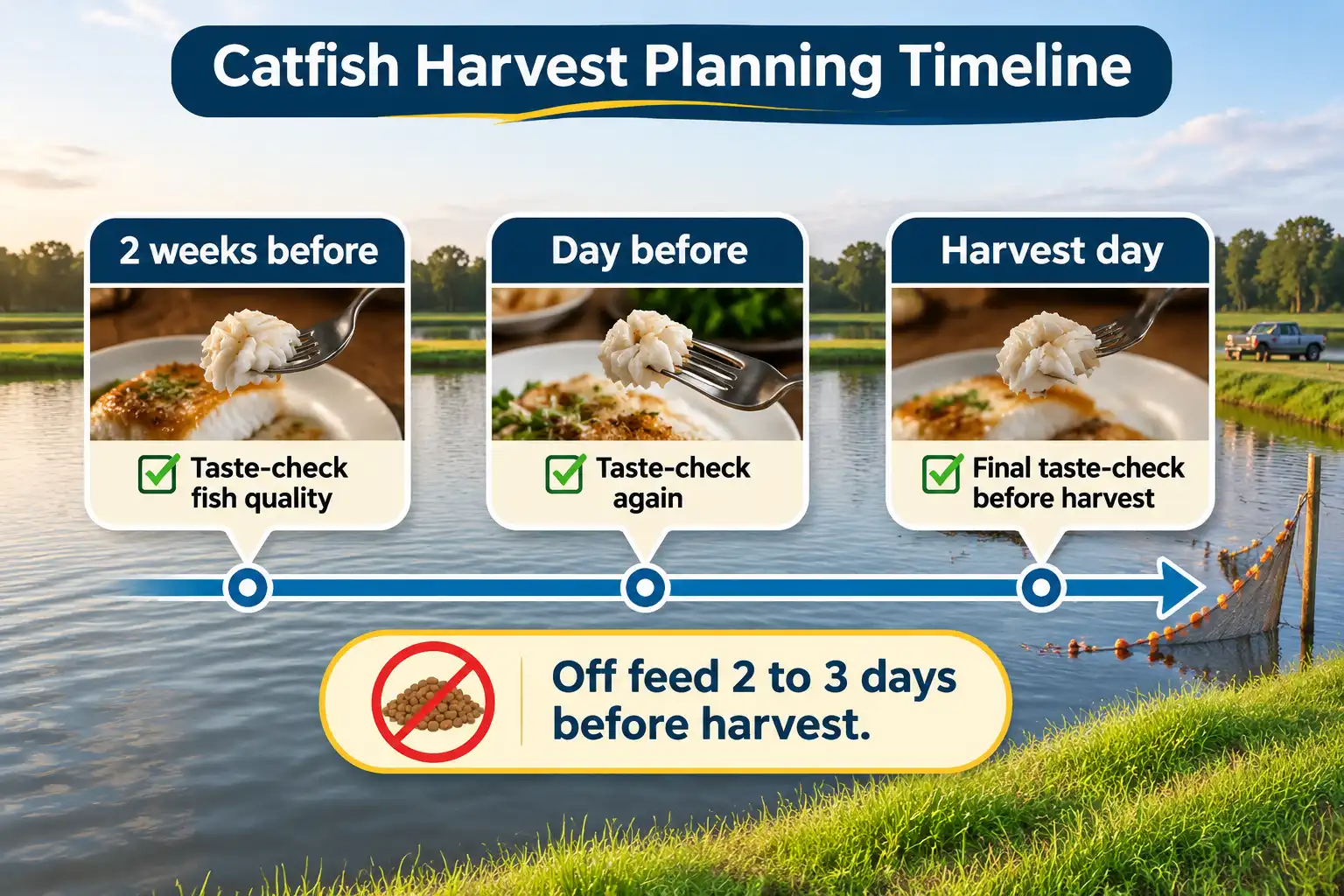
Commercial farms can’t harvest a pond until a processor approves a taste sample. Mississippi State University Extension describes the routine for channel catfish:
- Two weeks before harvest: the farm sends a fish sample to the processor’s taste testers.
- The day before harvest: the pond gets checked again.
- Harvest day: one more check before the fish load out.
In all, fish usually get checked 3 to 4 times in a row. If any sample tastes off, the processor refuses the fish. The pond then comes off the schedule until the flavor improves. Farmers also stop feeding 2 to 3 days before harvest to empty the gut.
That’s why supermarket catfish tastes consistent. SRAC Publication 192 points out that most consumers never notice pre-harvest off-flavor because processors screen for it. Our overview of how catfish farms grow and harvest pond fish shows where this step fits in the season.
Channel Catfish Nutrition: Farmed vs. Wild
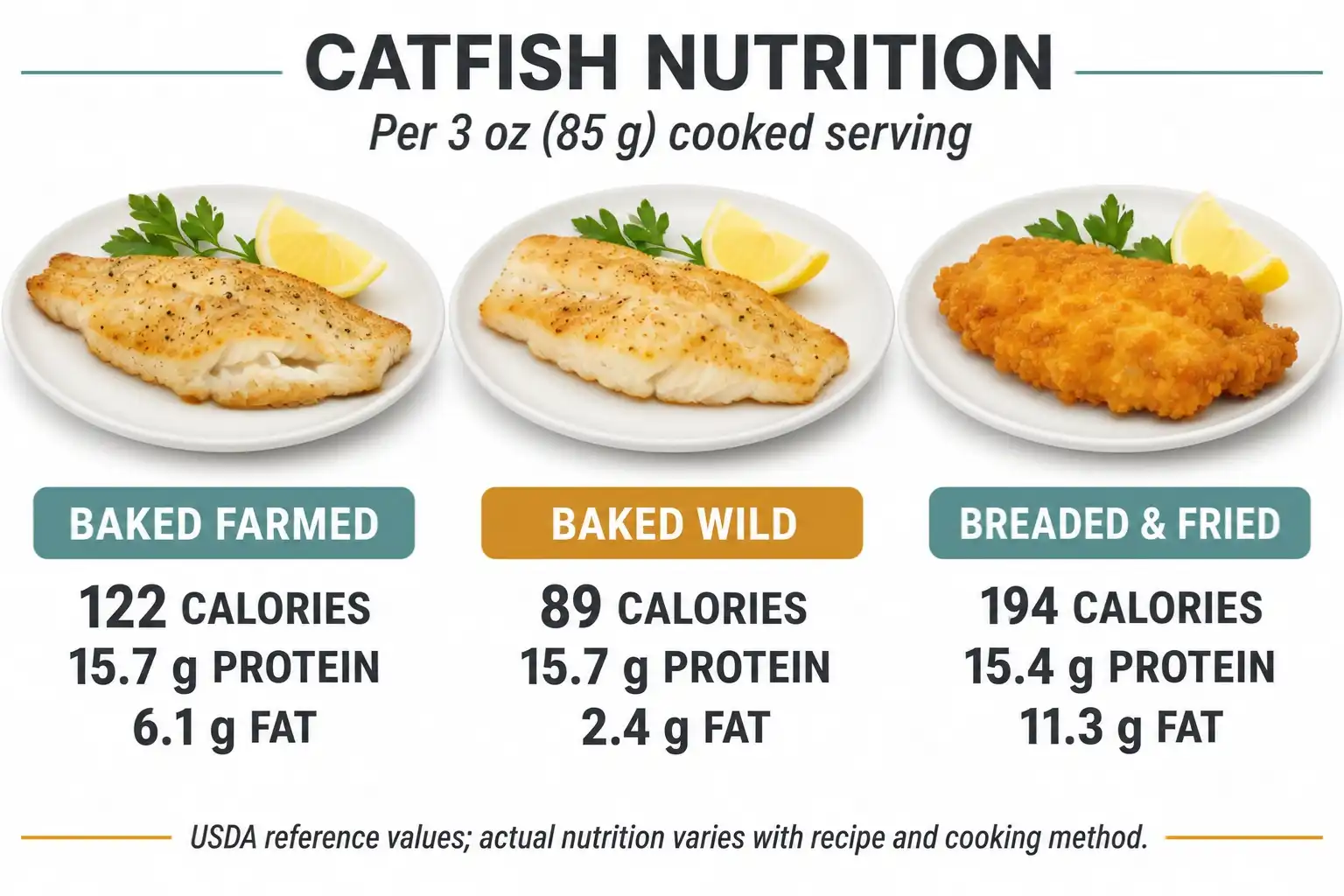
Channel catfish delivers solid protein with modest fat, and the cooking method changes the calories more than the source does. USDA FoodData Central figures, converted to a 3-ounce cooked portion:
| Per 3 oz cooked | Farmed channel catfish, baked or broiled | Wild channel catfish, baked or broiled | Channel catfish, breaded and fried |
|---|---|---|---|
| Calories | 122 | 89 | 195 |
| Protein | 15.7 g | 15.7 g | 15.4 g |
| Fat | 6.1 g | 2.4 g | 11.3 g |
The protein is the same. Farmed fish, raised on commercial feed, carry about 2.5 times the fat of wild fish. Breading and frying adds about 73 calories over a baked farmed portion.
A 5-ounce farmed fillet (143 grams) supplies about 26 grams of protein. It also supplies about 4 micrograms of vitamin B12, which is more than a full day’s Daily Value.
Still, channel catfish is not a strong omega-3 source. That same fillet holds only about 0.13 grams of EPA and DHA combined. If omega-3s are your goal, fattier fish such as salmon do more.
Can You Eat Catfish Safely? Mercury and Contaminants
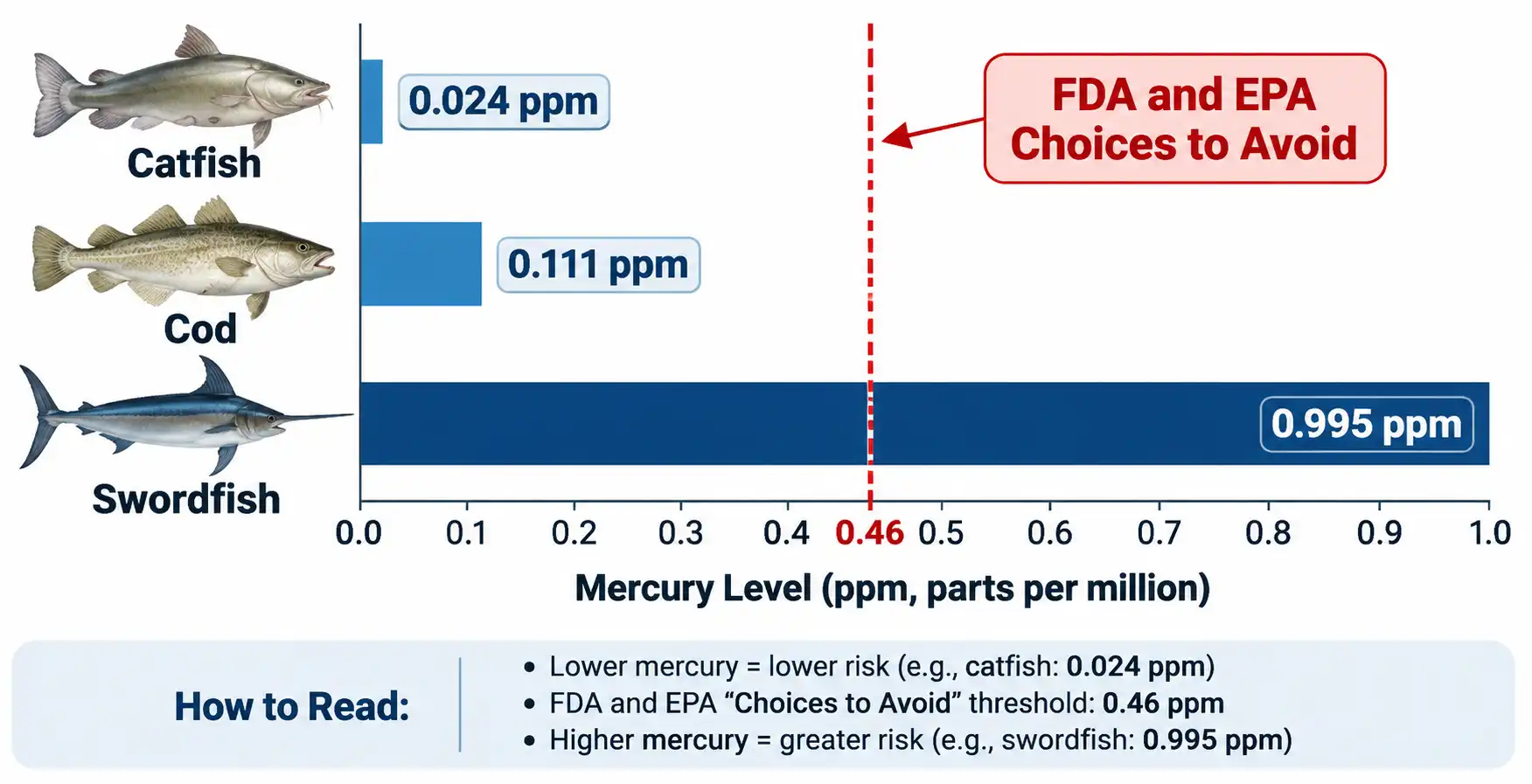
Yes. Farm-raised catfish is one of the lowest-mercury fish on the market. FDA monitoring found an average of 0.024 ppm of mercury in catfish across 59 samples from 1991 to 2010. In the same FDA mercury table, cod averages 0.111 ppm and swordfish 0.995 ppm.
For context, FDA and EPA put any fish that averages above 0.46 ppm in the “Choices to Avoid” group. Catfish sits far below that line.
Farm-Raised Channel Catfish
Farm-raised catfish is the most predictable choice. It eats commercial feed, passes processor flavor checks, and goes through USDA inspection. FDA and EPA advice allows pregnant or breastfeeding readers 2 to 3 servings a week from the Best Choices list, at 4 ounces per serving.
Wild-Caught Channel Catfish
Wild fish are a different case, because their contaminant load depends on the water. FDA and EPA advice notes that some fish caught by family and friends, catfish among them, are more likely to have advisories for mercury or other contaminants. Also, EPA’s Should I Eat the Fish I Catch? brochure (2014) says bottom-feeding fish such as catfish and carp are more likely to carry higher pollutant levels.
Before you eat wild channel catfish:
- Check your state’s fish consumption advisory for that exact lake or river.
- If there’s no advisory, FDA’s advice for pregnant readers and young children is one serving that week and no other fish.
- Keep smaller, younger fish.
- Remove skin and fat before cooking, and grill, bake, or broil.
Trimming helps with pollutants stored in fat, such as PCBs. It does nothing for mercury, which EPA notes is found throughout the fish’s tissue.
Are Big Channel Catfish Good to Eat?
Big channel catfish are edible. However, both the farm market and the federal contaminant advice favor smaller fish, for different reasons.
What the Market Pays for Size
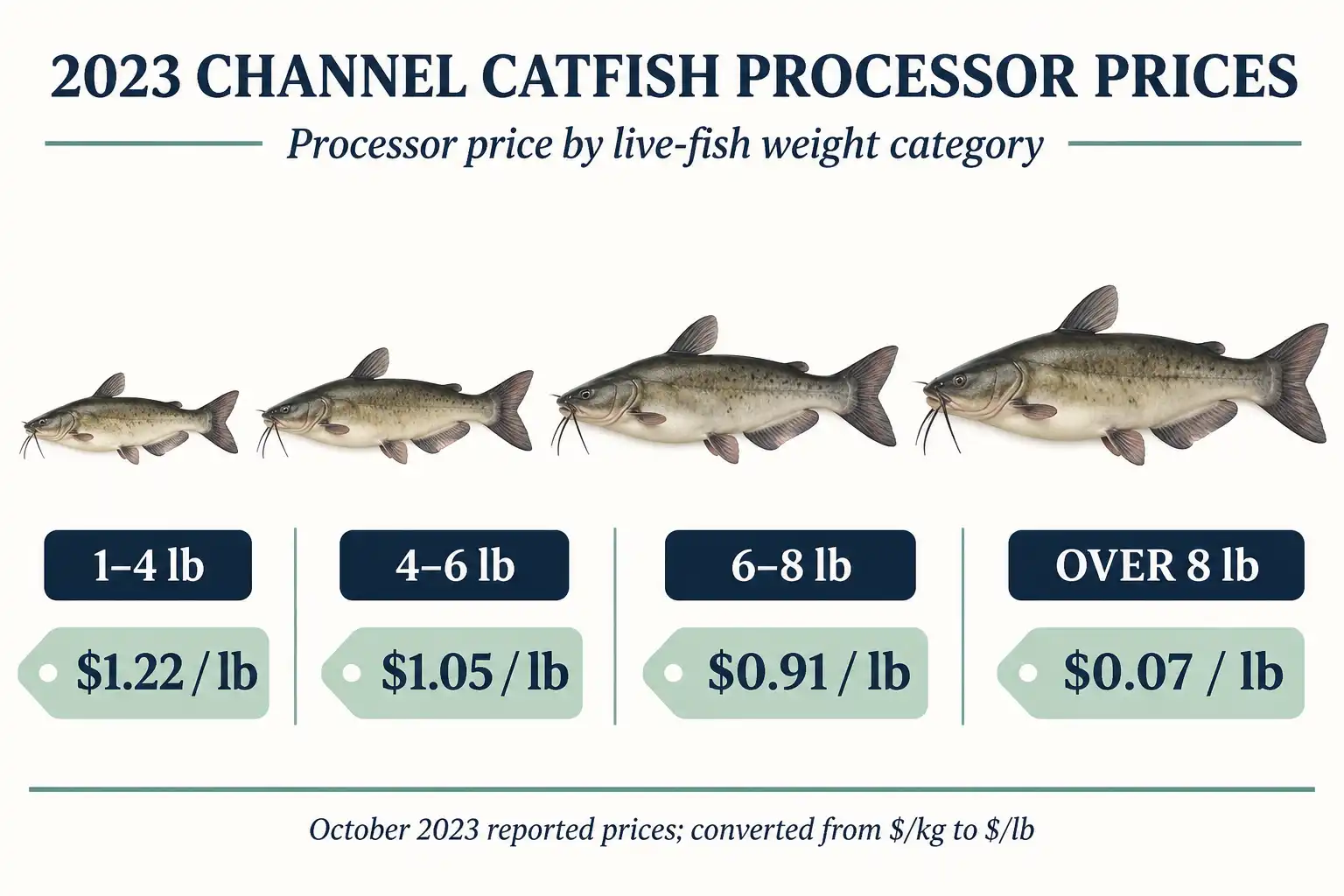
Alabama Extension’s 2023 US catfish industry update shows the price drop clearly. In 2023, processors paid an average of $1.24 per pound for premium-sized catfish of 1 to 4 pounds. Oversized fish took steep discounts:
- 4 to 6 pounds: $1.12 per pound
- 6 to 8 pounds: $0.99 per pound
- Over 8 pounds: $0.14 per pound
That year, 10 percent of processed fish (32 million pounds) were oversized.
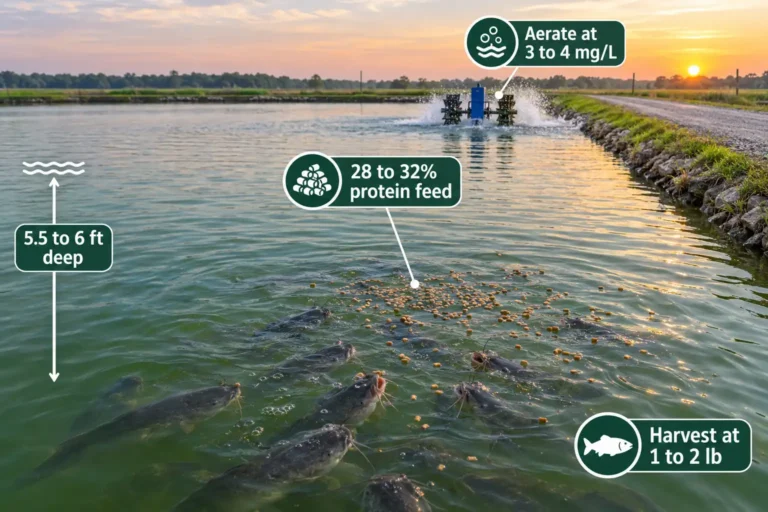
Two figures answer two different questions here. Mississippi State University Extension defines food-sized channel catfish as 1 to 2 pounds, which is the growout target. Alabama’s premium band, by contrast, runs to 4 pounds, which is the processor’s full-price range.
Bigger fish actually yield more meat per pound. SRAC Publication 184 notes that as catfish grow, the head gets smaller relative to the body, so larger fish give a higher share of dressed meat and fillets. In short, the discount is a market signal. It doesn’t prove the meat is worse.
Big Wild Catfish and Contaminants
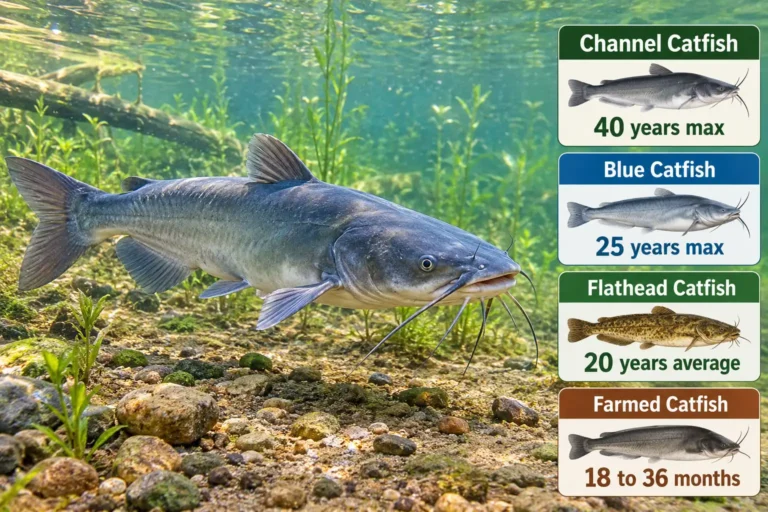
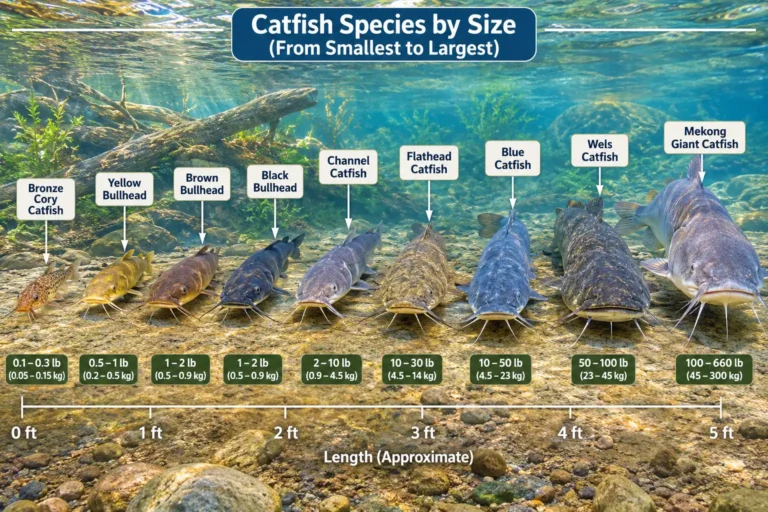
For wild fish, size matters more. EPA’s brochure advises eating younger fish, which are less likely to carry harmful pollutant levels than larger, older ones. Channel catfish can grow large and live for years (see how large channel catfish grow), so a trophy fish has had more time to build up mercury and PCBs.
Do Big Ones Taste Worse?
The research is thin. We found no controlled taste study comparing small and large wild channel catfish, and claims about how big fish taste are anecdotal. Two things are documented, though: flavor follows the water, and contaminant risk rises with age and size. Also, your state’s fishing regulations may limit how many large catfish you can keep.
How Many Servings Does One Channel Catfish Make?
A 1.5-pound channel catfish gives about 3 to 4 servings with the bones in. SRAC Publication 184 assumes a 62 percent dressing yield (head, guts, and skin removed) for processed channel catfish. Here is the math:
- 1.5 pounds live x 0.62 = about 0.93 pound dressed, or 15 ounces
- 15 ounces / 4 ounces per serving = about 3 to 4 servings, bones included
For a pond harvest, multiply it out. Say you have 200 channel catfish averaging 1.5 pounds each. That’s 300 pounds live. At 62 percent, you get about 186 pounds dressed, or roughly 740 four-ounce portions before the bones come out. The fish count and average weight are your own numbers, so plug in what you actually have.
Boneless fillets yield less than dressed fish, so expect fewer plates. Winter fish also run lower. SRAC Publication 184 notes that fish harvested in cold weather may dress out lighter because they feed less in cold water.
Eating Catfish From Your Own Pond
Pond-raised channel catfish is as edible as commercial fish. Run a few checks first.
Fish health and safety line: Never eat fish you find dead, or fish from a pond with unexplained losses. Check dissolved oxygen first, because low oxygen is the leading cause of fish kills. Then call your extension aquaculture specialist or a fish health diagnostic lab. Report heavy, unexplained losses to your state veterinarian or state aquatic animal health official.
Before you harvest:
- Taste a sample first. Cook a small, plain piece and taste it, the same idea as the processor checks Mississippi State Extension describes. If it tastes musty, wait, because off-flavor fades only slowly.
- Respect drug withdrawal times. If your fish got an FDA-approved drug or medicated feed, wait until the withdrawal time on the label has passed. Commercial farms hold treated fish until clearance times are met, per Mississippi State Extension.
- Check the rules before you sell. Catfish processing falls under USDA FSIS inspection. So contact your state agriculture department before selling any fish.
Buying Catfish: Reading the Label
The label tells you which fish you’re buying and where it came from.
- The name “catfish” is reserved. Under the USDA FSIS Siluriformes rule, only fish in the family Ictaluridae, which includes channel and blue catfish, may be labeled “catfish.” Other fish in the order Siluriformes, such as pangasius, need a different name.
- USDA inspects it. FSIS inspects domestic and imported Siluriformes fish under the Federal Meat Inspection Act, with full enforcement since September 1, 2017.
- Origin and method appear on the package. USDA Country of Origin Labeling rules require retail fish to show the country of origin and whether it was farm-raised or wild.
The label matters because imports are large. Alabama Extension reports that imported catfish made up 68 percent of the US catfish supply in 2023. If you want US channel or hybrid catfish, look for “Product of USA” and “farm-raised” on the package.
How to Cook Channel Catfish Safely
Cook channel catfish until the thickest part reaches 145°F, the USDA safe minimum internal temperature for finfish. At that point, the flesh turns opaque and separates easily with a fork. Don’t eat catfish raw.
For wild fish, EPA’s brochure adds a few steps that cut pollutants stored in fat:
- Remove the skin, fat, and internal organs before cooking.
- Grill, bake, or broil so the fat drains away.
- Skip the drippings and any broth made from them.
- Eat less fried fish, because frying seals fat-stored pollutants into the portion you eat.
Farmed catfish has much less of this concern, so frying is mostly a calorie question. A breaded, fried 3-ounce portion runs about 195 calories, compared with 122 for a baked farmed portion. Blackening, baking, and broiling keep the mild flavor without the extra fat. For storage and handling, see our guide to safe handling for farm-raised seafood.
FAQs About Channel Catfish Good to Eat
Can you eat catfish raw?
No, because USDA sets 145°F as the safe minimum internal temperature for finfish. Cook channel catfish until the thickest part reaches 145°F and the flesh turns opaque and flakes with a fork.
Is catfish safe to eat during pregnancy?
Yes, within limits, because FDA and EPA list catfish as a Best Choice. Pregnant or breastfeeding readers can eat 2 to 3 servings of 4 ounces a week from that list, counting every Best Choices species together.
Why does my pond catfish taste like mud?
Usually the cause is geosmin or MIB, two compounds made by blue-green algae and related microbes, per SRAC Publication 192. They aren’t harmful, but channel catfish purge them slowly, so a musty pond can take a while to clear.
Is swai the same as catfish?
No, because USDA FSIS rules reserve the name “catfish” for the family Ictaluridae, which includes channel and blue catfish. Swai is a pangasius, a related fish from another family, so it has to be sold under a different name.
What size channel catfish is best to eat?
For farmed fish, processors paid the most for 1 to 4 pound channel catfish in Alabama Extension’s 2023 data. For wild fish, EPA advises keeping smaller, younger fish, since they are less likely to carry pollutants.
Is farm-raised catfish healthier than wild?
Neither wins outright. Wild channel catfish is leaner, at about 89 calories per cooked 3 ounces against 122 for farmed in USDA data, while farmed catfish has a steady diet and documented low mercury.
Do you have to skin a catfish before cooking?
Most cooks do, because channel catfish have no scales and their skin is tough. EPA also advises removing skin and fat from wild-caught fish, since pollutants such as PCBs collect in the fatty parts.
The Practical Takeaway
Farm-raised channel catfish is a mild, low-mercury fish that processors taste-check before harvest, so it’s an easy weekly choice. For wild catfish, look up the advisory for that water, keep the smaller fish, trim the fat, and cook to 145°F. Big fish are edible, but the market and EPA’s advice both point toward smaller ones. Our channel and hybrid catfish guide covers the species from pond to plate.